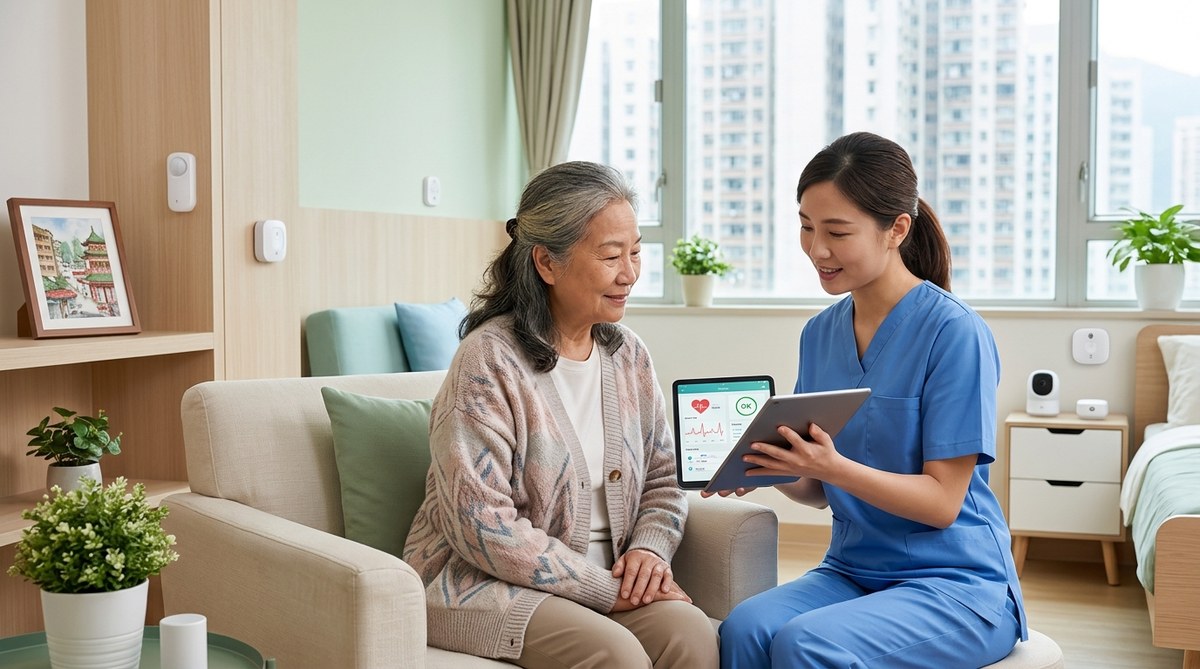
Hong Kong is aging. By 2026, nearly one in three residents will be over 60. For healthcare administrators, gerontology researchers, and family caregivers, this statistic is not news. It is a daily reality. The challenge of providing dignified, safe care for our elderly while managing tight resources is growing. Many families live in divided spaces. Caregivers often work full time. Nursing homes face staff shortages. Traditional monitoring methods just cannot keep up. This is where smart sensors for elderly care Hong Kong enter the picture. They are not futuristic gadgets. They are practical, proven tools that are already changing how we look after our seniors.
Smart sensors for elderly care in Hong Kong provide non-intrusive monitoring for falls, wandering, and vital signs. They reduce caregiver stress, improve response times, and respect privacy. This guide covers sensor types, setup steps, data integration, and real local case studies to help you choose the right system for your facility or home.
Understanding the Sensor Landscape
Before you buy anything, you need to know what is out there. The market for smart sensors for elderly care Hong Kong has matured. You are no longer limited to basic panic buttons. Here are the main categories you will encounter.
Passive Infrared (PIR) Motion Sensors
These are the workhorses of modern elderly monitoring. They detect body heat and movement. They do not use cameras, so privacy is protected. You place them in key areas: the bedroom, the bathroom, the kitchen. The system learns the senior’s daily patterns. If there is no movement by 10am, the system sends an alert. If someone gets up to use the bathroom at 3am but does not return to bed, the system flags a potential fall. This is the core of smart sensors for elderly care Hong Kong.
Contact Sensors
These are small devices attached to doors and windows. They are simple but powerful. They tell you if a person with dementia has left the apartment. They can also monitor fridge doors to check if meals are being eaten. In smaller Hong Kong flats, these sensors are easy to install and cost very little.
Bed and Chair Pressure Sensors
Falls from beds and chairs are common. A pressure sensor placed under the mattress or cushion detects when a person gets up. For night time monitoring, this is invaluable. It alerts caregivers before a fall happens, not after.
Wearable Devices
Watches and pendants with fall detection are becoming standard. The latest models in 2026 include GPS tracking for wandering prevention. They also measure heart rate and blood oxygen. The challenge in Hong Kong is battery life. Many seniors forget to charge devices. Look for units with at least seven days of battery.
Environmental Sensors
These monitor temperature, humidity, and smoke. In Hong Kong’s humid climate, mold can be a health risk. A sudden temperature drop could indicate an open window or a broken air conditioner. For seniors living alone, these sensors provide peace of mind.
A Practical Step-by-Step Setup Process
Implementing smart sensors for elderly care Hong Kong is not about buying the most expensive kit. It is about a thoughtful process. Here is a numbered list of steps to follow.
- Assess the specific risks. Does the senior have dementia? Are they prone to falls? Do they live alone or with a helper? Each situation needs a different sensor mix. A dementia patient needs door sensors and GPS. A frail elder needs bed sensors and motion detectors.
- Map the living space. Draw a simple floor plan. Mark where the senior spends time. Identify high risk zones like the bathroom and the stairs. In a typical 400 square foot Hong Kong flat, you might only need three to five sensors.
- Choose a hub or platform. Most sensors connect to a central hub. Some use WiFi. Others use Zigbee or Z-Wave. For Hong Kong, ensure the system works with the local 220V power and 5GHz WiFi bands. Some global brands struggle with local infrastructure.
- Install and test. Place sensors according to the floor plan. Test each one. Set up the alerts. Make sure the senior is comfortable with the devices. Explain that they are not cameras. They are safety tools.
- Train the caregivers. The system is only as good as the response. If a fall alert comes in at 2am, who gets the message? How do they respond? Set up a clear protocol. Include family members, neighbors, or a 24 hour monitoring service.
- Review and adjust. After two weeks, check the data. Are there false alarms? Are there gaps in coverage? Adjust sensor positions. Fine tune the alert sensitivity. This is an ongoing process.
Comparing Sensor Types for Different Needs
To make the decision easier, here is a table comparing the main types of smart sensors for elderly care Hong Kong. It shows what each sensor is best for, common mistakes, and the typical cost range.
| Sensor Type | Best For | Common Mistake | Estimated Cost (HKD) |
|---|---|---|---|
| PIR Motion | Daily activity monitoring, fall detection | Placing in direct sunlight or near AC vents | 200 – 800 per unit |
| Door/Window Contact | Wandering prevention, meal tracking | Forgetting to install on the main exit door | 100 – 400 per unit |
| Bed Pressure | Night time fall prevention | Using a sensor that is too small for the mattress | 500 – 1,500 per unit |
| Wearable Fall Detector | Active seniors who go outside | Not charging the device regularly | 800 – 3,000 per unit |
| Environmental | Safety from fire, heatstroke, or cold | Ignoring humidity alerts in Hong Kong’s summer | 300 – 1,000 per unit |
Integrating Data with Care Teams
Collecting data is one thing. Using it is another. The real power of smart sensors for elderly care Hong Kong comes from integration. You need to connect the sensor data to the people who act on it.
Many systems now offer a dashboard. This dashboard shows trends. Is the senior sleeping less? Are they moving less during the day? These patterns can signal health issues before they become emergencies.
“We saw a resident’s movement drop by 40% over three days. The family thought she was just tired. The data showed a urinary tract infection. We got her to the doctor early. That sensor saved her from a hospital stay.” – Dr. Karen Li, Geriatrician at a Tung Chung care home.
For family caregivers, the dashboard is a lifeline. You can check the app during your lunch break. You see that your father got up at 8am and has been moving around the kitchen. No news is good news. If something is wrong, you get an alert immediately. This reduces the constant worry that many caregivers feel.
For researchers, the aggregated data is gold. You can study patterns across a whole facility. Which rooms have the most falls? What time of day are seniors most active? This data can inform better facility design and care protocols.
Common Pitfalls and How to Avoid Them
Adopting new technology is not always smooth. Here are the most common mistakes people make with smart sensors for elderly care Hong Kong, and how to avoid them.
- Overwhelming the senior. Too many alerts, loud alarms, or complicated devices cause stress. Keep it simple. Use silent alerts that go to the caregiver’s phone, not the senior.
- Ignoring WiFi reliability. Hong Kong buildings are dense. Concrete walls block signals. Use a mesh WiFi system or choose sensors that use a dedicated hub with a longer range.
- Forgetting about power outages. Hong Kong has occasional typhoons. Ensure your sensor hub has a battery backup. Wearable devices should be charged regularly.
- Setting and forgetting. Sensors need maintenance. Batteries die. Sensors get knocked out of position. Schedule a monthly check of all devices.
Choosing the Right System for Your Situation
You have three main scenarios. Here is how to choose.
For a family caregiver looking after a parent in a private flat: Focus on motion sensors and a bed sensor. Add a door sensor if wandering is a concern. Use a simple app based system. You do not need a full facility solution. Look for brands that offer local Hong Kong support. Some global brands do not have local customer service.
For a nursing home or care facility: You need a professional grade system. Look for a solution that offers a central dashboard, multi user access, and integration with existing nurse call systems. The system should allow for zoning. Different wings may need different sensor types. Ensure the vendor provides training for your staff.
For a gerontology researcher: You need data export capabilities. Look for systems that offer raw data access via API. You want to analyze movement patterns, sleep cycles, and alert frequencies. Privacy compliance is critical. Ensure the system meets Hong Kong’s Personal Data (Privacy) Ordinance requirements.
The Role of AI in Modern Monitoring
By 2026, artificial intelligence is a standard feature in many sensor systems. AI does not replace human care. It enhances it. The AI learns what is normal for each individual. It reduces false alarms. A cat walking past a motion sensor will not trigger an alert. A senior who takes 30 minutes in the bathroom every morning will not cause a panic.
AI can also predict falls. By analyzing gait speed and sway patterns from motion data, the system can flag a person whose balance is declining. This gives caregivers time to intervene with physiotherapy or mobility aids.
For Hong Kong’s social services, this is a game changer. The government’s Elderly Services Programme Plan emphasizes aging in place. AI powered smart sensors for elderly care Hong Kong make this possible. Seniors can stay in their own homes longer. They maintain their independence. They stay connected to their community.
Building a Culture of Acceptance
Technology is only useful if people use it. Many seniors are wary of sensors. They worry about privacy. They worry about being a burden. You need to build trust.
Start with a conversation. Explain that the sensors are not cameras. They do not record video or audio. They just detect movement and temperature. Frame it as a tool for independence. “This sensor means you do not need a helper in the room all night. You have your privacy, and I have peace of mind.”
Involve the senior in the choice. Let them see the sensor. Let them touch it. Show them how small it is. Some seniors prefer a wearable pendant. Others prefer wall mounted sensors. Respect their preference.
In Hong Kong, family is central. The decision to install sensors is often a family decision. Involve siblings, children, and even the domestic helper. Everyone needs to understand the system and their role.
Future Trends for 2026 and Beyond
The field of smart sensors for elderly care Hong Kong is moving fast. Here are some trends to watch.
- Non contact vital signs monitoring. New radar based sensors can measure heart rate and breathing without touching the person. This is ideal for night time monitoring.
- Voice enabled alerts. Sensors that can speak. “Grandpa, please sit down. I have alerted the nurse.” This reduces the need for a phone or panic button.
- Integration with smart home devices. The sensor detects a fall. It automatically turns on the lights and unlocks the door for emergency services. This saves precious minutes.
- Community based monitoring. Neighbors and volunteers can opt in to receive alerts for seniors in their building. This builds a safety net for those who live alone.
Taking the First Step
If you are a healthcare administrator, start with a pilot project. Choose one wing or one floor. Install a basic set of smart sensors for elderly care Hong Kong. Run it for three months. Measure the results. Did falls decrease? Were response times faster? Use the data to build a case for wider adoption.
If you are a family caregiver, start small. Buy one motion sensor for the bathroom. See how it feels. Talk to your parent about it. If it works, add another sensor. You do not need to do everything at once.
If you are a researcher, partner with a local NGO or care home. Many are looking for data partners. Your research can inform better policy and better products.
Smart sensors for elderly care Hong Kong are not about replacing human touch. They are about extending it. They allow caregivers to focus on what matters: connection, compassion, and quality time. The technology handles the worry. You handle the care.
For more insights on how technology is reshaping social services in Hong Kong, read our guide on how technology is revolutionising social services in Hong Kong. You can also learn about essential tech tools every Hong Kong nonprofit should implement to support these efforts.
A Smarter, Safer Future for Our Elders
Hong Kong’s aging population is not a problem to be solved. It is a reality to be managed with dignity and innovation. Smart sensors for elderly care Hong Kong offer a path forward. They are affordable, respectful, and effective. They give seniors the freedom to live independently and give caregivers the confidence to let them.
The best time to start was yesterday. The next best time is today. Pick one sensor. Install it. See the difference. Your loved ones deserve nothing less.