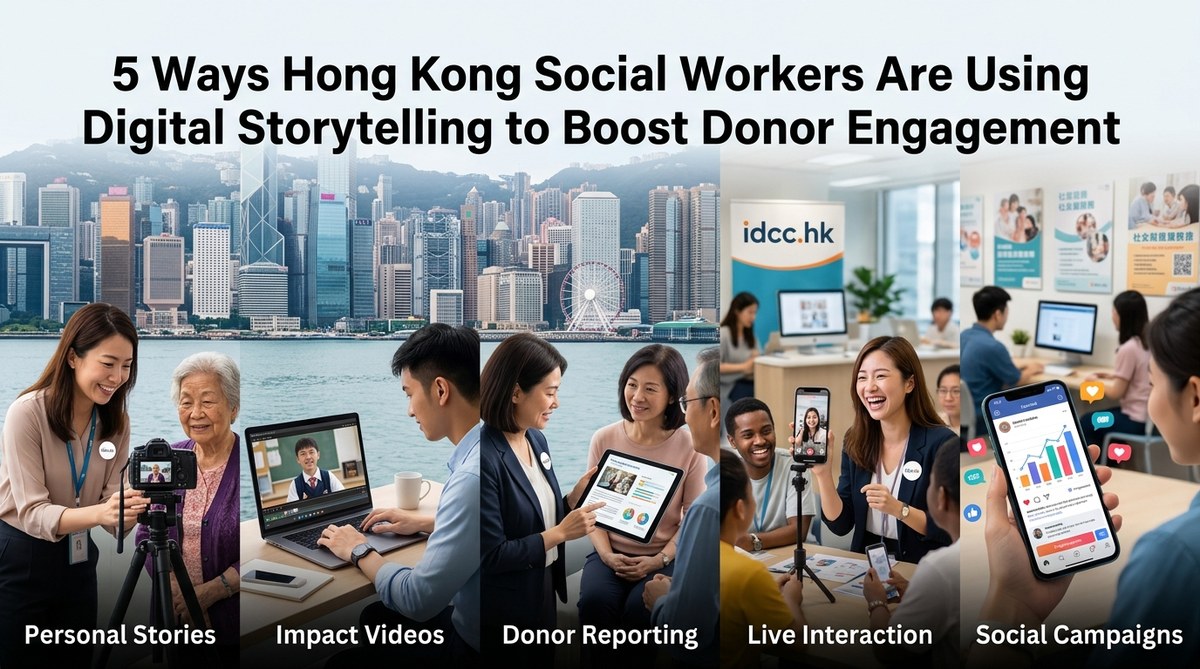
A handful of years ago, a small Hong Kong charity supporting at-risk youth faced a familiar problem. Their donation page was static. Their annual report was dense. Their donor base was shrinking. Then they tried something different. They asked a young woman named Mei to record a short video about her journey through their programme. She spoke into her phone camera on a rainy Tuesday afternoon. No script. No lighting crew. Just her story. Within a month, that single clip had been shared over 2,000 times on local parenting groups and WeChat channels. Donations rose by 18 percent. The charity had discovered what many social workers across the city are now learning: digital storytelling works.
Digital storytelling helps Hong Kong social workers turn abstract impact into personal, shareable moments that donors connect with. This guide covers five practical ways to use video, audio, and social media to build trust and drive donations. You will walk away with actionable steps, not just theory.
Why digital storytelling matters for Hong Kong nonprofits
Hong Kong donors are generous but cautious. Many have seen well-meaning campaigns fall flat. They want proof that their money makes a difference. A spreadsheet of outcomes does not move them. A story does.
Digital storytelling is the practice of using short-form media, such as video clips, audio recordings, photo essays, and social posts, to share real experiences from the people your organisation helps. It is not about polished marketing. It is about authenticity. When a grandmother in Sham Shui Po talks about how a meal delivery service helped her stay independent, that story carries more weight than any statistic.
The shift is already happening. A 2026 survey by the Hong Kong Council of Social Service found that 62 percent of local charities now use some form of digital content to engage supporters. Yet many social workers feel unprepared. They worry about privacy, production quality, and time. The good news is that you do not need a film crew or a big budget. You just need a phone, consent, and a clear strategy.
Five ways social workers are using digital storytelling right now
1. Client-led video testimonials with informed consent
The most powerful stories come from the people you serve. A client who has experienced homelessness, domestic violence, or long-term illness can describe their journey in a way no staff member ever could.
The process is straightforward:
- Identify a client who is comfortable sharing their experience.
- Explain how the video will be used and obtain written consent.
- Record a short interview (three to five minutes) using a smartphone.
- Edit the video to remove identifying details if needed.
- Share the clip on your website, email newsletter, and social channels.
One Kowloon-based organisation working with migrant domestic workers uses this approach regularly. They record short stories in Tagalog and English. The videos are shared on a private Facebook group for donors. Engagement rates are consistently above 40 percent.
“The first time we shared a client’s story on video, we were nervous. But the response was overwhelming. Donors told us they finally understood what we do.”
* Programme manager, Hong Kong Migrant Support Alliance
2. Audio diaries for emotional impact
Not everyone wants to be on camera. Audio diaries offer a less intimidating alternative. A client or social worker records short voice notes about their day. These snippets capture raw emotion. A crack in the voice. A pause. A laugh. These small moments build empathy.
Audio files are also easy to produce. A free app like Voice Recorder on any smartphone works well. The files can be compiled into a podcast episode or shared as standalone clips on WhatsApp groups.
A charity serving elderly residents in Tung Chung runs a weekly audio diary series. Listeners hear stories about loneliness, small victories, and the joy of receiving a hot meal. The series has become so popular that local businesses have sponsored episodes.
3. Photo essays with captions that tell a story
A single image can say a lot. A series of images with thoughtful captions can say even more. Photo essays are a low-effort way to show the arc of a client’s journey.
A youth centre in Wong Tai Sin uses this technique to document their annual camp. They post five to seven photos on their website, each with a short caption written in the first person. The captions describe what the young person felt at each stage. Nervous on arrival. Engaged during activities. Proud at the closing ceremony. Donors say these essays feel like they were there.
The table below compares three common digital storytelling formats used by Hong Kong charities.
| Format | Effort level | Emotional impact | Best for |
|---|---|---|---|
| Video testimonial | Medium | High | Building trust with new donors |
| Audio diary | Low | Medium | Recurring updates for existing supporters |
| Photo essay | Low | Medium | Showing progress over time |
4. Live social media updates from the field
Live video and real-time posts let donors see your work as it happens. A social worker at a food distribution event can go live on Instagram for two minutes. Donors see the queue, the volunteers, the smiles. It is unfiltered and immediate.
This approach works especially well for emergency appeals. When Typhoon Rai hit parts of the Philippines in 2021, a Hong Kong relief organisation used Instagram Stories to show their team distributing supplies. Donations poured in within hours.
The key is to keep it brief. A two-minute live video is enough. Do not overproduce. Authenticity matters more than polish.
5. Donor impact reports built around stories
Annual reports are often ignored. But a digital impact report built around stories can be compelling. Instead of a PDF filled with charts, create a simple webpage or a short video that walks donors through three or four client stories.
A charity focused on children’s education in Hong Kong produces a yearly “Stories of Impact” page. Each story includes a photo, a short video clip, and a quote from the child. The page also shows how donor funds were used. The result is a transparent, human-centred report that donors actually read.
A simple process to start your first digital storytelling campaign
You do not need a complex strategy to begin. Follow these steps:
- Choose one client who has given consent and has a compelling story.
- Decide on a format. Video, audio, or photo essay.
- Set a small goal. One story per month is enough.
- Share the story on one channel. Your website or a closed donor group.
- Track engagement. How many people watched, listened, or clicked?
- Ask for feedback. What did donors say? What did they ask about?
- Repeat and refine.
Common mistakes to avoid
Digital storytelling is simple, but it is easy to get wrong. Here are pitfalls to watch for.
- Forgetting to obtain proper consent. Always document permission in writing.
- Overediting. A polished video can feel fake. Leave in some natural pauses.
- Ignoring language barriers. Hong Kong donors read English, Cantonese, and Mandarin. Provide subtitles or translated captions.
- Sharing without context. A story needs a clear call to action. Tell donors what to do next.
- Focusing on the organisation instead of the client. The story is not about you. It is about them.
Tools and resources for Hong Kong social workers
You do not need expensive software. Free tools are often enough.
- Canva: For creating simple photo essays and social media graphics.
- CapCut: A free video editing app with subtitling features.
- Anchor by Spotify: For recording and distributing audio diaries.
- Google Forms: For collecting consent and feedback digitally.
For more on how technology can support your work, read about essential tech tools every Hong Kong nonprofit should implement.
Your next step starts today
Digital storytelling does not require a big budget or a dedicated media team. It starts with one person willing to share their experience. Ask a client if they would like to tell their story. Record it on your phone. Share it with your most engaged donors. See what happens.
The charities that build lasting donor relationships are not the ones with the slickest videos. They are the ones that show real people, real struggles, and real change. That is something every social worker in Hong Kong can offer.