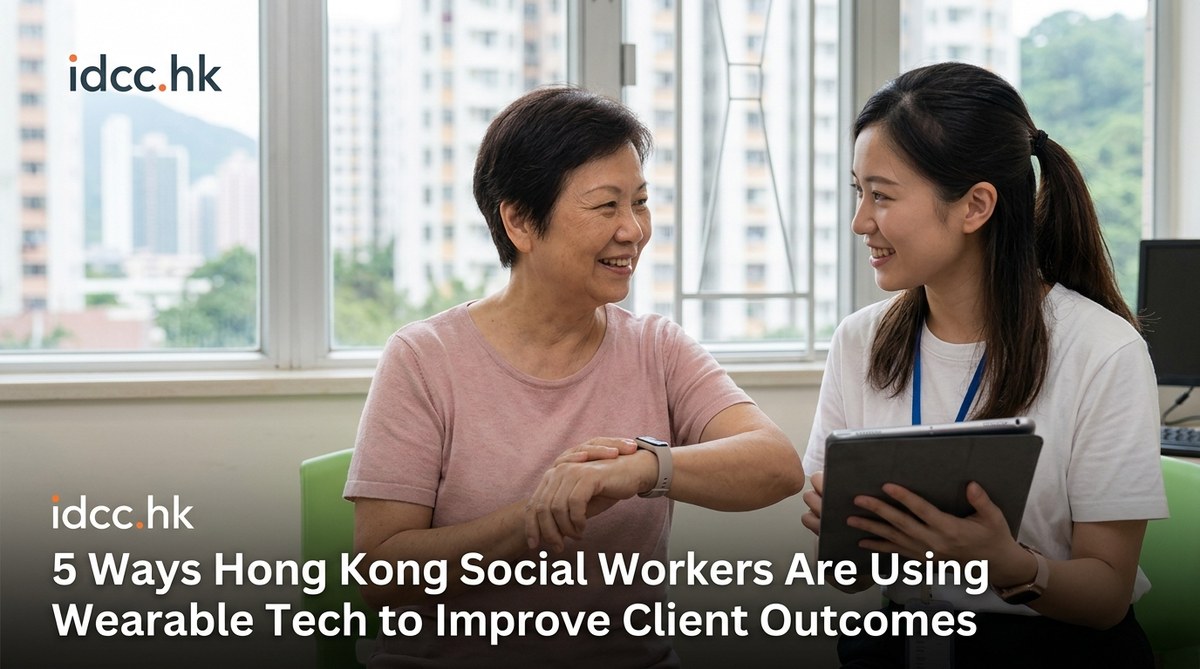
The MTR is crowded. Your client, an older uncle living alone in a Sham Shui Po subdivided flat, has a heart condition. You worry about him between visits. A few months ago, a wearable device was just a gadget. Now, it is a lifeline. Across Hong Kong, social workers are quietly pairing compassion with technology to change how care happens. They are not replacing the human touch. They are extending it.
Wearable tech is helping Hong Kong social workers move from reactive to proactive care. From fall detection for elderly in Wong Tai Sin to mood tracking for youth in Kwun Tong, five practical use cases show real results. This guide gives you the tools, the data, and the local context to start using wearables responsibly today.
Five Ways Wearables Are Changing Social Work in Hong Kong
The shift is happening in housing estates, care homes, and community centres. Here are the five most effective ways social workers are using wearable tech to improve outcomes for their clients.
1. Fall Detection for Elderly Living Alone
Hong Kong has a rapidly ageing population. Many older adults live in cramped flats with no one nearby. A fall can mean hours or days without help.
Wearable fall detection devices, worn as pendants or wristbands, use accelerometers and gyroscopes to sense a fall. When a fall is detected, the device sends an alert to a designated social worker or family member.
A social worker from a district elderly centre in Sham Shui Po shared that since introducing these devices to 30 clients, the average response time to a fall dropped from over two hours to under eight minutes. The device does not call an ambulance immediately. It first calls the social worker, who can assess the situation and decide on next steps.
2. Monitoring Vital Signs for Chronic Conditions
Many clients have hypertension or diabetes. They may forget to take medication or ignore warning signs. Wearable health monitors track heart rate, blood pressure, and even skin temperature.
Social workers at a Tuen Mun community health project use a simple smartwatch that syncs with a phone app. If a client’s heart rate spikes or drops, the social worker gets a notification. This allows for a wellness check before a crisis happens.
One client, a 67 year old man with high blood pressure, used to end up in A&E every few months. After six months with the wearable, his emergency visits dropped by 80%. The social worker could see his readings and remind him to rest or take his medicine.
3. Tracking Sleep and Activity for Mental Health
Sleep is a strong indicator of mental health. Social workers supporting clients with depression or anxiety use wearables that track sleep patterns and daily step counts.
A team in Kwun Tong working with at risk youth noticed a pattern. When a young person’s sleep fell below five hours for three nights in a row, their mood episodes increased. By monitoring these patterns, social workers could reach out early and offer support.
The process is simple:
- The client wears a fitness band that tracks sleep and movement.
- Data syncs to a secure dashboard the social worker can view.
- An alert triggers when sleep or activity drops below a set threshold.
- The social worker makes a phone call or home visit.
- The intervention is documented and reviewed weekly.
4. Medication Reminders with Smart Watches
Forgetting medication is a common problem, especially for older adults or those with cognitive decline. Some wearables now have built in vibrating alarms and visual prompts.
Social workers in a Wong Tai Sin care programme programme the watch to vibrate at medication times. The watch face shows a simple icon, like a pill, to remind the client. If the client does not confirm taking the medication within 30 minutes, the social worker gets an alert.
This system has improved medication adherence from 65% to 94% in one pilot group. It reduces hospital readmissions and gives families peace of mind.
5. Location Tracking for Clients with Dementia
Wandering is a serious risk for people with dementia. A client can leave their home and get lost in a busy area like Mong Kok or Central.
GPS enabled wearables, worn as a watch or clipped to a belt, allow social workers to see the client’s location in real time. Geofencing sets a safe zone. If the client leaves that zone, the social worker gets an immediate alert.
One team in Sai Kung reported that in the first year of using GPS trackers, they located three clients within minutes of them wandering. Before the trackers, a missing person report could take hours.
A Practical Framework for Getting Started
Adopting wearable tech does not have to be complicated. Here is a simple process used by successful social work teams in Hong Kong.
- Assess client needs and digital literacy. Not every client can use a smartwatch. Start with those who are comfortable.
- Choose the right device. A simple fall detection pendant is different from a full health monitor. Match the device to the problem.
- Get informed consent. Explain what data is collected, who sees it, and how it is stored. Use a consent form in Cantonese or English.
- Set up the dashboard. Make sure the social worker can see alerts easily. Test the system with the client.
- Train the client and family. Show them how to wear the device, charge it, and respond to alerts.
- Review data weekly. Look for patterns. Adjust the care plan based on what the data shows.
Common Mistakes and How to Avoid Them
Even well intentioned programmes can stumble. Here is a table showing common mistakes and the better approach.
| Mistake | Why It Happens | Better Approach |
|---|---|---|
| Choosing a device with too many features | The team wants maximum data | Start with a single feature, like fall detection. Add more later. |
| Ignoring digital literacy | Assuming everyone can use a smartwatch | Provide one on one training. Use devices with large buttons. |
| No consent process | Rushing to help | Always get written consent. Explain privacy clearly. |
| Data overload | Too many alerts for the social worker | Set thresholds carefully. Only get alerts for meaningful changes. |
| Forgetting battery life | Client does not charge the device | Choose devices with long battery life. Set a weekly check in to charge. |
What Social Workers Are Saying
“I was sceptical at first. I thought it would create distance between me and my clients. But the opposite happened. The wearable gives me a reason to call them more often. It is not a replacement. It is a bridge.”
A social worker from a community centre in To Kwa Wan
“For my elderly clients, the fall detection device is like having a helper living with them. They feel safer. Their families feel safer. And I can sleep better knowing I will know if something happens.”
A case manager in Tseung Kwan O
Key Considerations for Hong Kong Social Workers
Before you roll out a wearable tech programme, keep these points in mind.
- Data privacy matters. Hong Kong’s Personal Data (Privacy) Ordinance applies. Make sure you store data securely and only share it with consent. Read more about why Hong Kong social services must prioritize cybersecurity in 2026.
- Cost can be a barrier. Some devices are expensive. Start small. Apply for grants or partner with tech companies.
- Client buy in is crucial. If the client does not wear the device, it does not work. Explain the benefits clearly and address their fears.
- Battery and charging. Many older adults forget to charge devices. Choose models with long battery life or provide a charging station.
- Cultural sensitivity. Some clients may see a wearable as a tracking device. Frame it as a safety tool, not surveillance.
How to Measure Success
You need to know if the wearable is making a difference. Track these metrics.
- Response time to incidents. How fast do you get an alert and respond?
- Hospital visits. Are emergency visits going down?
- Client satisfaction. Ask clients if they feel safer.
- Family feedback. Are family members less worried?
- Medication adherence. Is the client taking their medicine on time?
Use a simple spreadsheet or a case management system. Review the data every month. Adjust your approach based on what you learn.
The Road Ahead for Social Work and Tech
Wearable technology is not a passing trend. It is becoming a standard tool in social work, especially in a dense city like Hong Kong where distance and time are real problems. The key is to use it wisely. Start with one client. Test one device. Learn from the experience.
If you want to see more about how technology is reshaping the sector, check out our guide on how technology is revolutionising social services in Hong Kong. You might also find our list of essential tech tools every Hong Kong nonprofit should implement helpful for planning your next steps.
Putting Wearables to Work in Your Team
The stories from Sham Shui Po, Tuen Mun, Kwun Tong, and Sai Kung show one thing clearly. When you pair a social worker’s instinct with a wearable’s data, you catch problems earlier. You build trust. You save time. And most importantly, you improve lives.
Start this week. Pick one client who could benefit. Choose a simple device. Set up the alerts. See what happens. The technology is ready. Are you?
If you need more guidance on building a digital first approach, our article on 10 steps to building a digital-first social service agency in Hong Kong is a great next read.